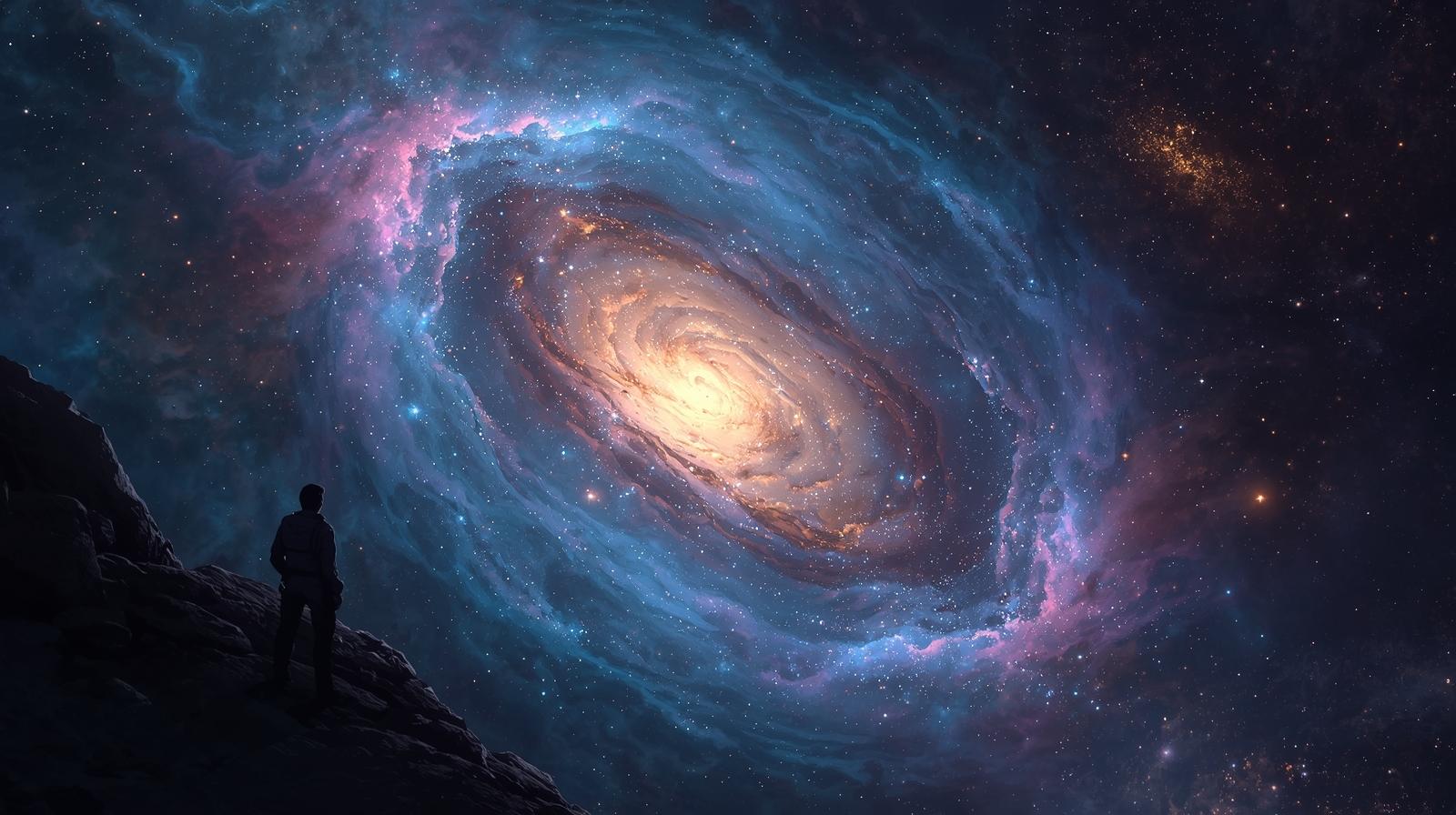
What is Space?
What is Space?
Look around you. No, really — take a moment. Look at the space between your screen and the wall behind it. The space between your fingers. The vast, empty gulf between you and the Moon. We are born into it. We move through it. We breathe it. We measure our lives by the distances it imposes. And yet, for something so all-encompassing, so utterly inescapable, almost none of us ever stop to ask a simple but staggering question: What is it?
We call it Space. And we have been getting it profoundly wrong for most of human history.
Space is the grandest stage of all — the silent, invisible canvas upon which the entire universe paints its masterpiece. But what if that canvas is not passive? What if it is not just “nothing”? What if space is the most dynamic, mysterious, and alive thing we can possibly imagine? What if the empty void that surrounds us right now is seething with energy, warped by mass, and perhaps not even fundamentally real?
Today, we are not simply going to define space. We are going to journey into its heart. We are going to explore the magic, the mystery, and the mind-bending truths that modern physics is only just beginning to uncover. Forget what you think you know. Prepare to see the void in a whole new light.
The Ancient Void — The Illusion of Emptiness
For most of human history, we thought we knew. The ancient philosophers, the great thinkers of Greece and Rome, of Persia and India — they saw space as the great container. An infinite, static stage, set by the gods or by nature, where the drama of planets and stars played out according to divine law. Space was the “void.” Absolute nothingness. A passive backdrop. A celestial theatre that simply existed, unchanging and eternal, waiting for matter to fill its halls.
But this idea of nothingness is our first, and perhaps greatest, illusion.
Think of a quiet, still pond. The water is so calm it is almost invisible. You see the water lilies, the fish beneath the surface, the reflections of clouds overhead — but the water itself? It is just there. Transparent. Effortless. Taken entirely for granted. Now, drop a pebble into that pond. What happens? Ripples. Suddenly, the apparent “nothingness” of the water comes alive. It has a structure. It transmits energy. It reacts. The pebble’s presence reshapes the entire surface. This is our first clue to the true nature of space. Space is not a passive stage. It is the water. And the planets, the stars, the galaxies — they are the pebbles. Their presence reshapes everything around them.
For centuries, the greatest minds in science accepted Newtonian mechanics as the final word on the nature of space. Isaac Newton described a universe embedded within an absolute space — a fixed, infinite coordinate grid against which all motion could be measured. Space was the unchanging ruler. Gravity was a mysterious force that reached invisibly across the void to pull objects together. It was elegant. It worked magnificently for over two hundred years.
And then came Einstein.
In the early twentieth century, a young clerk in a Swiss patent office began having the kind of thoughts that would rewrite reality. Albert Einstein imagined a man falling off a roof. In that terrifying, weightless instant, the man would not feel his own weight. He would float. He would be, in a very real sense, in free fall — indistinguishable in experience from floating in empty space. This simple, almost playful thought experiment ignited a revolution. Einstein realised that what we perceive as the force of gravity is not a force at all. It is the warping, the bending, the curving of the cosmic canvas we call spacetime.
Imagine space — and time — as a vast, taut, stretchy fabric. A silken sheet pulled across the cosmos. Now place a heavy object in the centre — a star like our Sun. It creates a deep, dimpled well in the fabric, a gravitational valley. The Earth is not being pulled by some invisible string reaching across empty space. It is simply rolling around the rim of that well, like a marble circling the inside of a bowl. Mercury performs its delicate, spiralling dance still closer to the Sun’s deep curvature. The bending of light from distant galaxies, the slowing of clocks near massive objects, the gravitational waves rippling outward from colliding black holes — all of these confirmed phenomena are the direct result of mass and energy reshaping the fabric of spacetime.
This is not merely mechanics. This is geometry. The very shape of reality itself dictates the motion of the heavens. Space has a topography — hills and valleys, peaks and trenches, all sculpted by the presence of energy and mass. The void, it turns out, has architecture. And that architecture governs everything.
The Quantum Foam — The Seething Undercurrent of Reality
Einstein showed us that space is a fabric — dynamic, curved, shaped by what it contains. But quantum mechanics reveals something even more unsettling. This fabric is not smooth. It is not a serene, silken sheet stretched peacefully across the universe. At the deepest levels of reality, it is a raging, boiling, utterly chaotic ocean.
Zoom in. Closer than an atom. Closer than a proton. Closer than a quark. Down to the very Planck scale — the smallest possible unit of meaningful measurement in physics, approximately 1.6 × 10⁻³⁵ metres. At this scale, the universe as we ordinarily understand it breaks down completely. The smooth, continuous fabric of Einstein’s spacetime dissolves into something altogether different.
We find a frenzy. A seething, bubbling foam of pure potential energy. Virtual particles pop in and out of existence at staggering rates, borrowing energy from the vacuum itself in a frantic, endless dance permitted by Heisenberg’s Uncertainty Principle. They are born from nothing and return to nothing in a fleeting instant measured in Planck time. This is what theoretical physicists call the Quantum Foam, a concept first formally proposed by John Archibald Wheeler in 1955.
Think of the fabric of space not as a smooth sheet, but as the surface of the ocean during a violent storm. From a great distance, from an aircraft at altitude, the ocean looks flat, almost featureless. But from up close, from a small vessel in the midst of the tempest, it is a chaotic dance of waves, spray, and bubbles. At the very smallest scales of reality, space and time themselves lose their smooth, continuous meaning. They become granular, uncertain, flickering. They fluctuate wildly.
This is not poetry or metaphor. This is the leading edge of theoretical physics. It suggests that the smooth, continuous space we experience in our everyday lives is an average — a large-scale statistical illusion — much like a film appears smooth and continuous even though it is composed of individual frames. The true nature of space, at its most fundamental level, is a storm of creation and annihilation. A cosmic ferment of energy density so extraordinary it defies everyday imagination.
According to quantum field theory, the energy density of empty space — what physicists call the vacuum energy or zero-point energy — is immense. Every single cubic centimetre of what you call “empty space” is alive with this quantum activity. The void is not empty. It is pregnant with potential. It is seething with the constant birth and death of virtual particle pairs, each flickering in and out of existence too rapidly to be directly observed, yet leaving measurable traces — the Casimir effect, the Lamb shift, spontaneous emission — that physicists have confirmed with great experimental precision.
You are not sitting in emptiness. You are submerged in a cosmic maelstrom. The space between your hands, between the atoms of your body, between the galaxies of the observable universe — it is all alive with this quantum activity, this fizzing potentiality. The void is filled with a latent energy that shapes the forces of nature and may even be responsible for the accelerating expansion of the universe itself through what we call dark energy.
The ancient philosophers were wrong. The void is not nothing. The void is the most something there is.
The Cosmic Web — Architecture on the Grandest Scale
We have zoomed in to the smallest possible scale and found chaos and creative energy. Now let us pull back — far back — to the cosmic scale, to the architecture of space as it appears across billions of light-years.
For much of the twentieth century, astronomers mapped galaxies and saw them as isolated islands in the cosmic dark. But then we started to see the pattern. As telescope technology advanced and computational power allowed us to map the universe in three dimensions, a breathtaking and completely unexpected truth emerged from the data.
Galaxies are not scattered randomly. They are strung along vast invisible filaments — threads of matter stretching for hundreds of millions, even billions, of light-years across the cosmos. These filaments connect at nodes of immense density, vast clusters and superclusters where thousands of galaxies swarm together in gravitational embrace. Between the filaments lie the great cosmic voids — regions of space so empty, so devoid of matter, that they span hundreds of millions of light-years and contain almost nothing at all.
This magnificent large-scale structure is what cosmologists call the Cosmic Web, and it is the largest known structure in the observable universe.
But what shapes these filaments? What weaves this cosmic web? The answer is something we cannot see directly: dark matter. This mysterious substance — which makes up approximately 27% of the total energy content of the universe, compared to ordinary matter’s mere 5% — does not interact with light. It cannot be seen. It cannot be touched. It is detected only through its gravitational influence on ordinary matter and on the path of light. Dark matter provides the invisible scaffolding, the gravitational skeleton, around which ordinary matter — gas, dust, stars, and galaxies — accumulates and condenses over billions of years.
The filaments of the Cosmic Web are, in essence, the densest ridges of the dark matter distribution. The galaxies we observe are merely the bright lights illuminating these invisible highways — tracers of a far larger, unseen structure that dominates the universe.
And this structure is not random. It is the fossilised imprint of the Big Bang itself — the direct descendant of quantum fluctuations that existed in the first fraction of a second after the universe’s birth. In those earliest moments, the universe was an extraordinarily hot, dense, almost perfectly uniform plasma. But not quite perfectly uniform. Tiny quantum fluctuations created minute variations in density: regions fractionally denser and fractionally less dense than average.
As the universe expanded and cooled, these tiny seeds grew. Gravity amplified the density variations, drawing matter into the denser regions and emptying the voids still further. Over 13.8 billion years of cosmic evolution, those infinitesimal quantum ripples were stretched and amplified by the expansion of the universe into the vast, magnificent structure we observe today.
The tiniest, most random flicker in the quantum foam at the dawn of everything became the seed for a supercluster of galaxies. Our own home — the Milky Way galaxy — sits within the Laniakea Supercluster, a gravitational structure spanning approximately 520 million light-years and containing the equivalent mass of 100,000 Milky Way galaxies. And Laniakea itself is just one node in the vast, ongoing tapestry of the Cosmic Web.
The space you are in right now is part of this web. You are connected — through the living fabric of spacetime — to the Great Attractor, to distant quasars billions of light-years away, and to the cosmic microwave background radiation that fills every direction of the sky with the afterglow of the Big Bang. The architecture of space connects you to the very beginning and to the very edges of the observable universe.
The Holographic Principle — Is Space Itself an Illusion?
We have seen that space is curved. We have seen that it seethes with quantum activity at the smallest scales and weaves a magnificent web across the cosmos at the largest. But now we arrive at the most radical, the most philosophically shattering proposal in all of modern physics — a proposal that does not merely describe the properties of space, but calls into question whether space itself is fundamentally real.
What if three-dimensional space as we experience it every day is a kind of elaborate illusion? What if it is not a fundamental feature of reality, but an emergent one, projected from something deeper and stranger?
This is the Holographic Principle.
The story begins with black holes — those ultimate warpers of spacetime, regions where gravity is so intense that not even light can escape. In the 1970s, physicist Jacob Bekenstein made a startling discovery: the entropy of a black hole — the measure of its information content, the number of possible internal states it could occupy — is not proportional to its volume, as one might naturally expect. It is proportional to the area of its event horizon, the two-dimensional surface that marks the point of no return.
This is profoundly strange. Normally, if you have a three-dimensional object and you want to know how much information it can store, you think in terms of volume — the more space, the more room for information. But for a black hole, it is the surface area that counts. All the information about everything that has ever fallen into the black hole appears to be encoded on its two-dimensional boundary, not within its three-dimensional interior.
Stephen Hawking deepened this mystery when he showed that black holes are not completely black — they radiate energy through a quantum process now known as Hawking radiation. This raised a profound paradox: if a black hole slowly evaporates away through Hawking radiation, what happens to all the information about everything that fell into it? Does it simply disappear?
Physicists Gerard ’t Hooft and Leonard Susskind took Bekenstein’s insight and pushed it to its logical conclusion. Perhaps the information-area relationship applies not just to black holes, but to all of space. Perhaps the entire observable universe — with all its three-dimensional richness, all its stars and planets and people — can be completely described by information encoded on a distant, two-dimensional surface at its boundary.
This is the Holographic Principle. It has received powerful mathematical support from the work of Juan Maldacena, whose Anti-de Sitter/Conformal Field Theory correspondence — known in physics as AdS/CFT — demonstrated that a specific gravitational theory in a three-dimensional space is exactly equivalent to a quantum field theory with no gravity living on the two-dimensional boundary of that space. The two descriptions are mathematically identical. The implication is extraordinary: three-dimensional space, with all of its apparent physicality and depth, may be entirely encodeable in a lower-dimensional description.
Think of a credit card hologram. The flat, two-dimensional surface of the card contains all the information needed to project a three-dimensional image when light strikes it correctly. The three-dimensional image appears utterly real — it has depth, it has structure — yet it is entirely a projection from a flat surface. The Holographic Principle suggests that our three-dimensional universe might work the same way. Our entire reality — the depth we perceive, the distances we measure, the feeling of three-dimensional space — might be a magnificent projection from a vast, distant, two-dimensional surface at the edge of the observable universe.
If this is true, then space is not fundamental. It is emergent. It arises from something deeper, something that is not itself spatial. Space would be to physics what temperature is to thermodynamics — a useful, macroscopic concept that emerges from microscopic processes that are themselves nothing like temperature. We experience space as real and solid and three-dimensional because that is the natural language of our scale of existence.
This is where cutting-edge theoretical physics meets the oldest questions of philosophy and metaphysics. For millennia, Eastern philosophical traditions — particularly within Hinduism and Buddhism — have spoken of Maya, the great illusion, the apparent solidity and separateness of the material world that conceals a deeper, undivided reality. And here we are, at the leading edge of twenty-first century mathematical physics, arriving at a conclusion that rhymes strikingly with those ancient intuitions: the space we move through, the distances we measure, the very three-dimensionality of our experience, may be a magnificent emergent phenomenon — a cosmic-scale holographic projection from a deeper, non-spatial reality.
The Human Connection — We Are Space
So what does all of this mean for us? Here in our daily lives, feeling so separate from the cosmos, so isolated by the distances of space and time, what do these extraordinary discoveries actually tell us about who and what we are?
They tell us that we need to radically revise our most basic assumptions about our relationship with the universe.
You are not a body moving through space. You are a perturbation of space. You are a localised, temporary pattern in the quantum fields that permeate all of reality. The atoms that make up your body were not always yours — they were forged in the nuclear furnaces of long-dead stars that lived and burned for billions of years before exploding as supernovae and scattering their material across the galaxy. That stellar material condensed into new generations of stars and planets. On one of those planets, the cosmic chemistry of carbon and water and energy arranged itself into the patterns of life. And over billions of years of evolution, some of that stardust became capable of asking questions about the nature of the universe that made it.
The calcium in your bones was synthesised in ancient stellar cores. The iron in your blood was forged in the final, explosive moments of a massive star’s death. The oxygen in your lungs was created in the hearts of suns that burned billions of years before our own Sun was born. You are not visiting the universe. You are the universe — temporarily, locally, beautifully organised into a self-aware configuration.
The quantum foam that seethes at the smallest scales inside the atoms of your body is the same quantum foam that fills the vast voids between galaxies. The spacetime curvature that governs the orbit of the Earth around the Sun is described by the same mathematics that governs the warping of space around a supermassive black hole at a galaxy’s centre. The cosmic web whose filaments span hundreds of millions of light-years began as quantum fluctuations occurring simultaneously at every point in space — including the space that would one day become you.
You are not separate from the cosmos, peering out at it through the windows of your senses. You are a piece of the cosmos that has become capable of examining itself. When you look at the night sky, you are not a small, isolated creature gazing out at a vast and indifferent universe. You are the universe, looking back at itself through the improbable lens of conscious awareness. You are a localised knot of self-reflection in the cosmic fabric — a place where space itself has, after 13.8 billion years of evolution, developed the capacity to wonder about its own nature.
The space that seems to separate us from each other, and from the stars, is not a barrier. It is a bridge. It is the living, dynamic, curved and quantum-active medium that connects all things. It carries light and gravity and quantum entanglement between the most distant corners of the observable universe. It is the shared medium in which all of existence unfolds.
The mystery of space is, ultimately, the mystery of existence itself. And in exploring it, we are engaged in the most profound act of self-knowledge: the universe, through us, learning what it is made of and how it works.
Conclusion — The Void Is the Most Something There Is
We began with a simple question: What is space? And we have arrived somewhere extraordinary.
Space is not the empty, passive void that the ancient philosophers imagined. It is a dynamic, living medium — a fabric that can be curved and warped by energy and mass, as Einstein demonstrated through the geometry of general relativity. It is a seething quantum landscape at the smallest scales, filled with virtual particles and vacuum energy, as quantum field theory reveals. It is woven into a magnificent large-scale structure by the gravitational influence of dark matter, forming the Cosmic Web that connects every galaxy in the observable universe. And it may not even be fundamental — it may be an emergent, holographic phenomenon arising from a deeper, two-dimensional encoding of reality, as the Holographic Principle proposes.
Space is curved. Space is quantum. Space is webbed. Space is — perhaps — an illusion.
The next time you gaze up at the night sky and feel the smallness that comes from contemplating infinite distances, remember: you are not a small, isolated creature overwhelmed by an indifferent cosmos. You are part of it. You are made of it. You are it — a temporary, self-aware arrangement of the same matter and energy and quantum fields that make up every star, every galaxy, every filament of the Cosmic Web. The void between the stars is not empty nothingness. It is alive with quantum activity, shaped by gravity, threaded by dark matter, and resonating with the afterglow of the Big Bang.
You are not looking at nothing when you look at space. You are looking at the most something there is. The dynamic, quantum, curved, and perhaps holographic canvas of all that ever was, is, and ever will be.
The mystery of space is the greatest story ever told. And we are all part of its still-unfolding narrative.
Dive Deeper into the Holographic Multiverse
If this exploration of space has sparked a sense of wonder and a desire to go further, there are many ways to continue the journey.
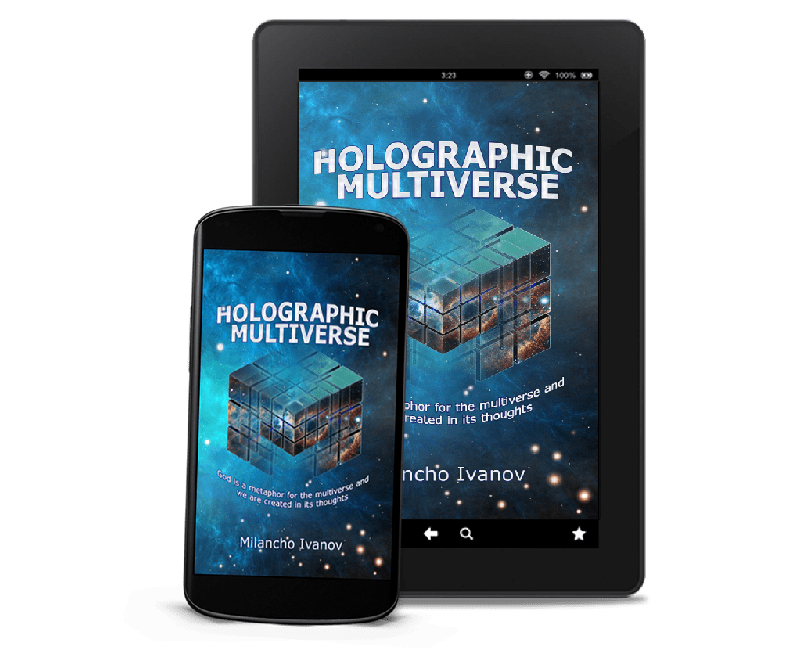
📖 Get the Book — Holographic Multiverse
Available as Audiobook, PDF, EPUB, and MOBI, this book expands far beyond what any single article can cover — journeying into parallel universes, cosmic consciousness, the true nature of time, and the deepest questions about the reality we inhabit. If you are ready to take the next step into the frontier where physics and philosophy converge, this is where to begin.
👉 Get the Book Here
🌟 Unlock Exclusive Content on Patreon
Join the Holographic Multiverse community on Patreon to download the book, access bonus materials, and become part of a growing community of curious minds exploring the edges of reality together.
👉 Join Patreon
🌐 Visit the Website
For more articles, explorations, and insights at the intersection of physics, cosmology, and consciousness:
https://www.holographic-multiverse.com
📌 Stay Connected
Follow Holographic Multiverse across social media for new content and explorations:
📘 Facebook | 📸 Instagram | 🐦 X (Twitter) | 📹 YouTube

Related Posts
Recent Posts
Categories
*Available in EPUB, MOBI, PDF, MP3 (Audiobook)